
I recently made my 100th sale on Etsy, which feels like a good time to reflect on my experiences as an Etsy seller and share some tips for anyone considering setting up their own shop.
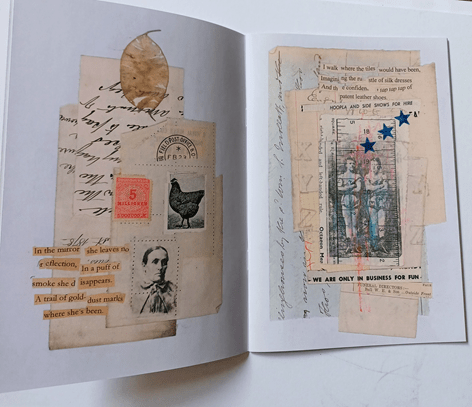
My first collage zine
I made my first Etsy sale back in July 2021, when I revived an Etsy shop that had been dormant since 2006 (set up on a whim and then pretty much abandoned). I was in no hurry to get it up and running, which gave me plenty of time to make my shop look a bit more professional and informative. I spent a lot of time trying to find the right logo and graphics for my storefront, and I would recommend using Canva, which has lots of free templates available that can easily be customised.
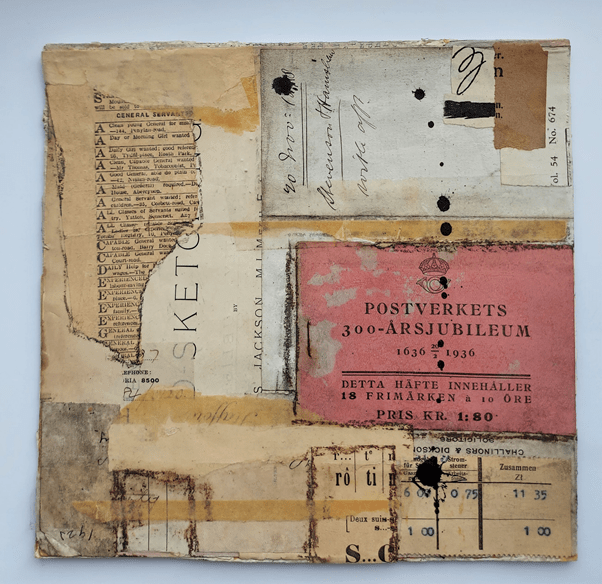
The first artwork I sold on Etsy
There are, of course, plenty of other ways to sell your artwork, both online and in person, but Etsy does have the advantage of making the process extremely easy. I’ve toyed with the idea of setting up my own online shop, but for the moment Etsy suits me, particularly as it’s my side hustle: I work four days a week and don’t have as much time as I’d like to devote to marketing; I prefer to spend my days off making art rather than dealing with website housekeeping.
So what makes an Etsy shop succeed? It very much depends on what you’re selling but there are some key points to consider, namely:
1. Know who your target audience is and use tags in your listings that will bring your ideal buyers to your shop;
2. Understand how to price your work (factoring in cost of materials and also postage if you’re going to have an all-inclusive price);
3. Good photographs of your items, and plenty of them, are essential.
I know my work is quite niche, so I need my listings to be tailored for a very specific market. The advantage of having such a niche product is that you’re less likely to get drowned out by thousands of other sellers offering very similar items.
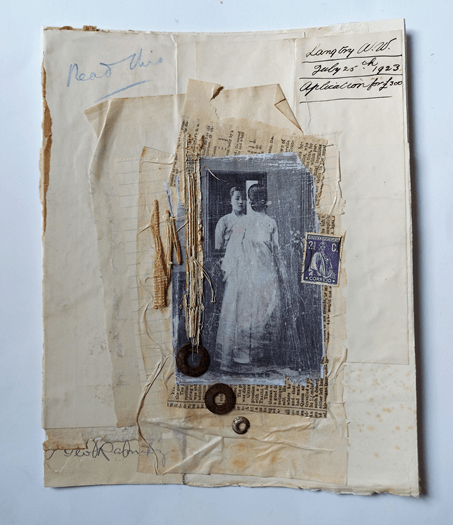
I try to include in my shop works with a wide variety of price points. I want my work to be affordable, but I also want my prices to reflect the time as well as the thought that go into creating each piece. As a guide, I looked at the shops of successful Etsy collage artists. I also looked at their listing descriptions and the tags they used. It’s a useful exercise in understanding how to market artwork on Etsy.
One of the most useful things I did was to pay for one of Claire Reed’s Etsy audits. These are a very affordable way to get your shop checked out and made a huge difference to my own shop in terms of visibility.
I don’t enjoy marketing my work and I try to do it in a fairly low-key way. I do use social media, and I know from my Etsy stats which sites bring the most visitors to my shop (currently Pinterest, and I would recommend getting on Pinterest if you want to sell your artwork). I’m most active on Instagram in terms of follower numbers, but it has never translated into Etsy visits. That’s okay; for me Instagram has always been about interacting with other artists, learning from them, and finding inspiration in their work. Instagram has also provided me with a number of other very valuable art-related opportunities. (I will write about my Instagram experiences in another post, but for now I’ll just say be very careful when responding to DMs – there are a vast number of sharks in those particular waters!)
I’ve also now armed myself with a box of business cards. I used a company called MOO and I’m very happy with the cards, which I slip in with each Etsy order. I also try to include a few extras for repeat buyers, and every sale is accompanied by a signed vintage postcard.

I still think of my Etsy shop, and my side hustle as an artist – and, indeed, my identity as an artist – as a work in progress. I don’t have any deadlines or goals I want to reach, I just want to keep making art that people enjoy. I still get a thrill when I pack up a piece, wondering how it will look in its new home, hoping it will bring pleasure to the new owner.
 Helen Kitson
Leave a comment