It has been a while since my last blog post, for many reasons. As I mentioned in my previous post, 2024 was challenging on a number of levels. 2025 has turned out to be almost as challenging, and I’m thinking that this is how my life is going to be from now on: trying as best I can to manage everything that’s going on in my life instead of coasting along. In some ways it’s a good thing; it sharpens the mind, stops me from becoming complacent.
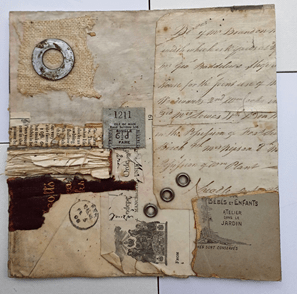
© Helen Kitson, 2025
I started a new job at the end of November 2024, and although on the face of it the role is very similar to my previous job, in other ways it is vastly different. Every firm has its own ways of doing things, its own unique procedures. I admit there have been a few times when I’ve cried in the toilets, and felt I was simply too old to be doing this to myself, but I think it was a necessary move, and in the long term I think this will be good for me, even if in the first few weeks I wanted to run back to my former employers and beg them to take me back!
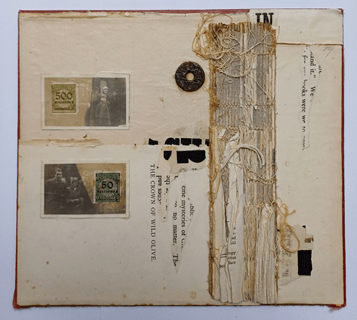
© Helen Kitson, 2024
I’m very lucky in that I work four days a week (Fridays off) and from 8.30 till 4pm, so I get nice long evenings during the week. I think, post-Covid in particular, flexible working has become more important to many of us, and I think eventually the standard Mon-Fri 9-5 will become less and less the norm as people realise the importance of the work-life balance and insist on work hours that suit their own particular circumstances.
One thing that I’m struggling to get back into is reading. Typically I would read 100 or so books a year, a mixture of fiction and non-fiction, contemporary and historical. During Covid lockdown I found it almost impossible to read anything, and in the years that followed I have found it much more difficult to concentrate on anything more profound than detective novels. Nothing wrong with that genre, of course, but I do miss the days when I mixed things up and read a much greater variety of genres. I try not to feel too guilty; I try to remember all the thousands of books I’ve read over the years, and the impact they’ve made on me. And some of my favourite books I’m now able to pass on to my daughter, who was never a great reader but who has, at the age of 22, discovered a love for literature.
Thank goodness, though, for art books, which are both intellectually and visually stimulating as well as providing inspiration for my own artwork. Currently I’m reading two very provocative books, Vitamin C+: Collage in Contemporary Art, and Art Crazy Nation by Matthew Collings. The first book is an image-heavy survey of international artists working with collage, chosen by a team of art experts; the latter a fragmented and anecdotal take on the state of British art in the years immediately following the heady ‘Cool Britannia’ years of Britpop and the yBas. The latter is an often irritating book in its delivery and tone, but enjoyable nonetheless. There is something in both books that I’ve been thinking about a lot lately. Although Vitamin C+ is interesting and visually appealing, one thing that has occurred to me while reading it is that the focus is heavily skewed towards politically-engaged collage artists.
Nothing wrong with this, of course, but it does feel at times as if collage art that is primarily focused on politics is very much privileged over art that is primarily aesthetic in its intent. Collings’ book makes similar references to art that is ‘political’ but in a critical way, finding little to admire in work that is politically overt, un-aesthetic, and preaching to the choir. After all, the targets for much of this politically-engaged art are the kind of people who would never set foot in an art gallery. At the same time, Collings seems broadly sympathetic to art critics with a Marxist frame of reference, but more (it seems to me) in a kind of nostalgic way rather than because he believes that Marxism has any real relevance. To be fair, Art Crazy Nation was published in 2001, which seems like only yesterday to me but obviously is a world away in terms of current socio-economic and political realities.
According to Mark Thwaite, “Reading Collings remains a wonderful pleasure, but it remains a pleasure for the same reasons that viewing a work by Hirst remains one: neither Collings, nor those artists he now criticises, work hard enough to convince us that what they have to say to us is anything more than a joke, a glib anecdote or an amused observation. Both he and they need to put a little more effort into thinking through what questions they really do expect art to answer.”
Does Thwaite have a point? Honestly, I don’t know. I have always had a fondness for the work of Tracey Emin – her rawness, her autobiographical urgency – but Hirst has always left me cold. Everything I’ve read about him leads me to suspect his only (or, let’s be generous, his primary) goal was to become rich and famous. And if so, he has of course achieved this brilliantly*, and I rather admire him for that, but his art itself has never moved me. (It is vaguely interesting, to me at least, that Hirst was born on 7th June 1965, literally the day after I was born. My life has been, very obviously, a great deal less interesting!).
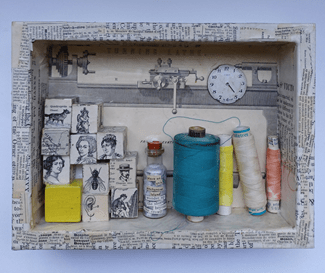
© Helen Kitson, 2024
Some might find Collings’ style grating, art, even superficial, but perhaps that’s the point. He’s dealing with art that is, to a large extent, very obvious. Call it what you like, we all know what it’s hip to like and what it’s not cool to like. Not rocket science, is it? And of course broadly speaking I am totally on the liberal, left-wing, anti-capitalist side, but I know how difficult that is to practice in daily life. I buy stuff from Amazon while also buying a weekly organic fruit and veg box from Riverford. ‘You either have to be part of the solution, or you’re going to be part of the problem’, right? But was it ever that simple? The older I get the more I realise how many shades of grey there are; that straight black vs white just doesn’t cut it in our postmodern, AI world.
So I will carry on making my own art, on my own terms, according to my own aesthetic values, because if nothing else it is genuinely felt, it is part of me; there is a little bit of me in everything I create. I shy away from political or social comment in my work partly because it feels jarring to me to make the right (but empty) noises from the vantage point of my reasonably comfortable middle class existence, but also because that’s not why I make art. Which isn’t the same thing as saying I want it to be safe, sanitised, non-confrontational. What I’m saying is that I want art to be a truly broad church where the purely aesthetic – the formal qualities of artworks – is as valued as the socially and politically engaged.
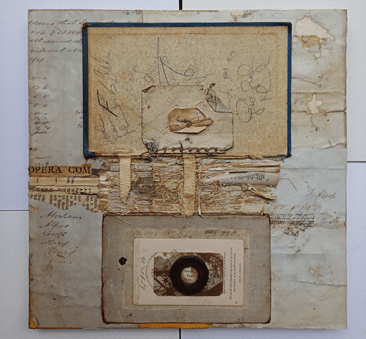
© Helen Kitson, 2025
*He is reportedly the United Kingdom’s richest living artist, with his wealth estimated at US$384 million in the 2020 Sunday Times Rich List. – Wikipedia


 Helen Kitson
Leave a comment