
If, like me, you’re a decent, trusting sort of person, it can come as a bitter blow to learn that there is a seemingly endless number of people out there in cyberspace who are prepared to use every trick in the book to take advantage of that trust to hack you, scam you, and otherwise take advantage of your good nature.
A few years ago I had my Instagram account hacked. Reported it, but never regained control of that account. The work involved in setting up a new one was painful and time-consuming, and of course I’ve lost access to all the photos on my old account, which still makes me fume. Instagram is not much good at responding to reports of hacking, so it’s vital to do everything you possibly can to keep your account secure.
Two-step verification (2SV) is vital, as it means your password can’t be changed without keying in a code you receive via your phone (you’ll also get a set of back up codes to use to get back in to your account if you lose/break your phone).

© Helen Kitson. Collage on canvas panel, 20cm square, sold via Instagram DM
Which brings me to DMs. I’ve had many valuable interactions with people via Instagram DMs, leading to some great opportunities and sales, but – and it’s a very big but – there are also endless people using DMs to scam.
Below I’ve pasted in a random selection of screenshots showing various conversations I’ve had via Instagram DM. All of these I shut down, blocking the accounts, but it’s not always easy to sort the scammers from the people who are genuine.
Any DM that begins ‘Hello Dear’ or variants thereof is an immediate red flag, as is anyone asking for personal details (phone number, bank account details, etc). Another major red flag is simply the tone of the message. Does it feel right? If something feels off about it, don’t bother pursuing the conversation, just block.
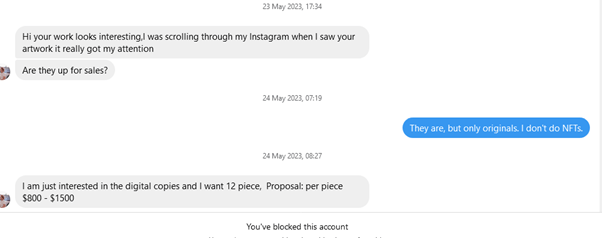
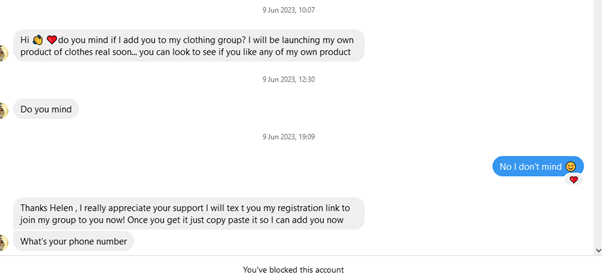

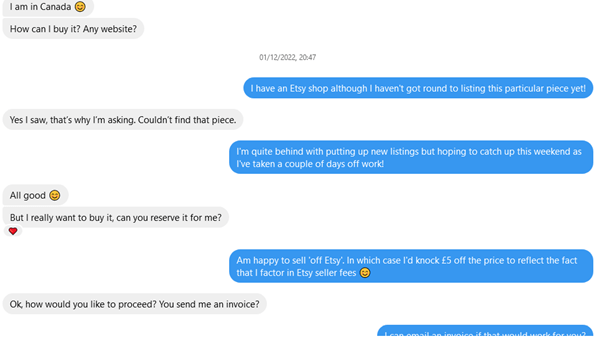
This isn’t, of course, an exhaustive list of possible approaches, and sometimes I prolong the conversation to get a better feel for the person behind the DM and what their motives might be. Always look at the profile for the person sending you the message – have they made many posts? Are there interactions with people on their posts? Look at the ‘About this account’ information if available, which will tell you when they joined and, if you’re lucky, where they are based. Be wary if that information isn’t available.
Also watch out for messages from people who pester you for a quick answer – they don’t want you to walk away from your phone/PC to think about the message and listen to your gut feeling saying something is off. Walk away anyway. If they are genuine, they’ll wait; and if they’re really that pushy, do you want to have anything to do with them in any case?
There are lots of websites giving details of the most common types of IG scammer messages, but new ones are popping up all the time. Bottom line: do your due diligence, and don’t panic if you get a message saying something terrible will happen if you don’t respond to a DM (particularly if you’re asked to click on a link). Walk away from the PC or turn off your phone. Get someone you trust to look at the message. Google the substance of the message to see if anyone else has received the same type of message. I’ve gained a huge amount from Instagram but it’s also made me far more cautious and, yes, less trusting, but there’s always a price to be paid, and online safety must always come first. That block button is your friend, use it!
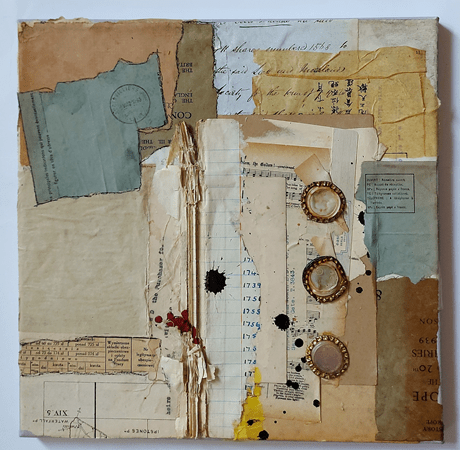
© Helen Kitson. Collage on cradled canvas, sold via Instagram DM.


 Helen Kitson
Leave a comment